

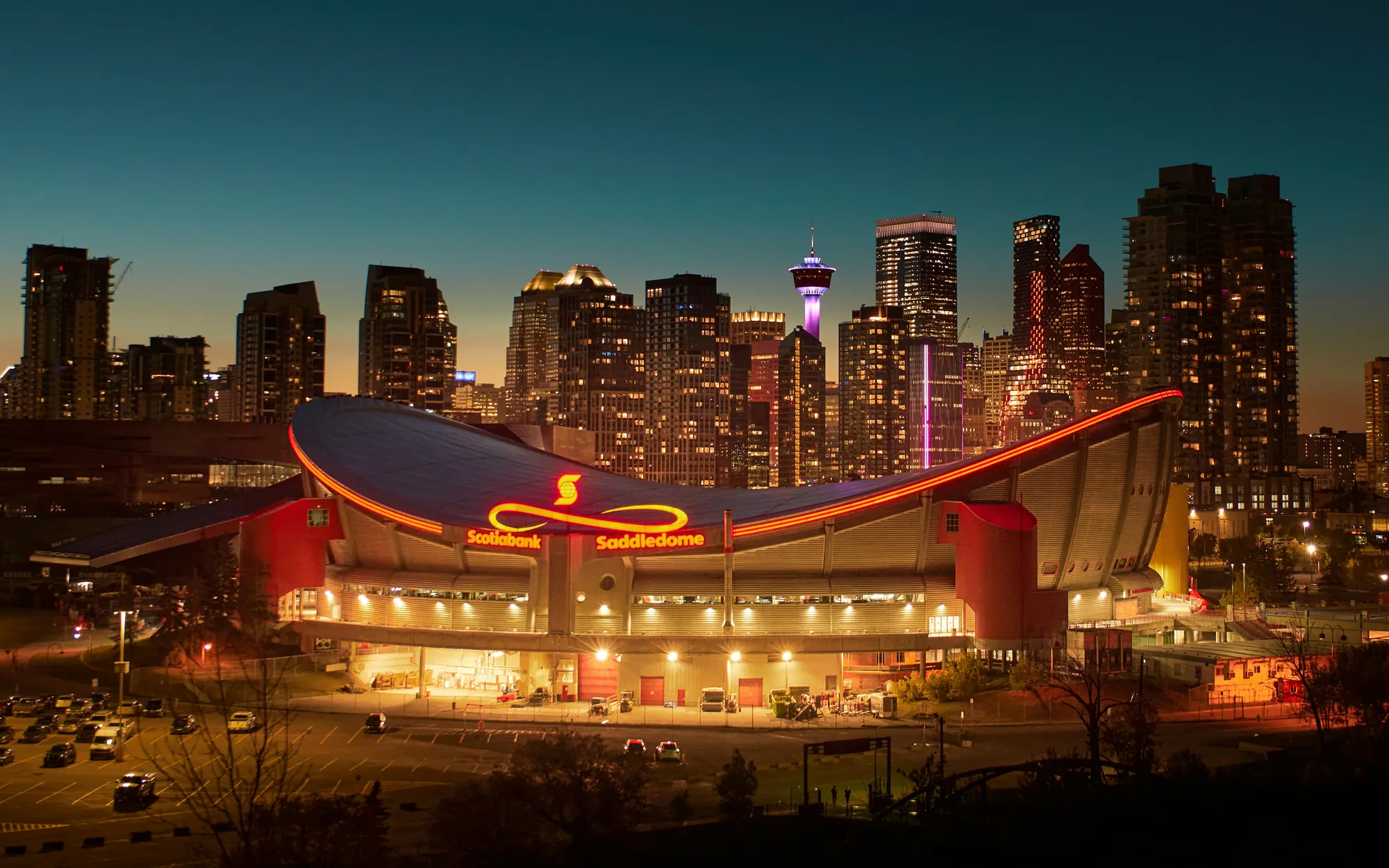
Calgary DTC brands thatscale past the plateau.
Meta, TikTok, Shopify CRO, and retention flows. The systems behind Calgary DTC brands from first traction to real scale.
[ 02 · THE STANCE ]
Calgary DTC brands hit ceilings.
Scaling past them takes systems, not luck.
The brands that scale past seven figures treat marketing as an operating system. Creative volume, retention infrastructure, paid media discipline. Everything else is noise. We run the system.
Ecommerce marketing for a Calgary DTC brand
As a Calgary ecommerce agency, we connect four systems around your store. Paid acquisition on Meta and TikTok brings people in. Conversion work makes the Shopify storefront easier to buy from. Email and SMS through Klaviyo support repeat purchases. Measurement helps you see which changes are working and what to improve next.
Most Calgary stores stall because they build the first one and skip the other three. Traffic goes up, revenue does not, and the paid budget gets blamed for a checkout problem.
Media budget is agreed before launch and funded so prospecting, retargeting, and lookalikes are not starved at the same time. Management is a flat monthly fee on top, and we take no cut of ad spend.
Expect the storefront and retention work to show up first, because it operates on traffic you already have instead of traffic you have to buy. Paid scale comes after, since the algorithm needs several creative iteration cycles before it will spend confidently. That is the order we work in. We do not put a date on your revenue.


How Calgary DTC buyers actually shop.
The buying motion in 2026 is messy. People discover on TikTok, research on Reddit, buy on a phone at midnight, and only become valuable on the third order. Marketing fails when it ignores the back half. Acquisition is half the system.
Discovery
Buyer is scrolling TikTok at 11PM, swiping through Instagram, or searching Google for a category solution. They don't know your brand yet. Hook strength in the first 1.5 seconds decides whether you exist to them or get scrolled past. Generic brand awareness ads burn here.
Consideration
Buyer lands on the PDP, opens 4 other tabs comparing alternatives, reads reviews, adds to cart, leaves. Page speed, social proof above the fold, and clarity of value prop decide whether they come back. This is the stage where most Calgary DTC stores leak the most revenue.
Purchase
Checkout happens (or it doesn't). Express pay, minimal form fields, free-shipping threshold, and a clean cart drawer compress this. Then post-purchase upsell + a thank-you that doubles as a brand moment. Most Calgary brands ship a generic Shopify confirmation and miss the second-order opportunity.
Retention + LTV
Email/SMS flows pick up the customer for the next 90, 180, 365 days. Welcome series, abandoned browse, post-purchase, winback, replenishment, loyalty. Brands with 35%+ repeat purchase compound into scale. Brands stuck at 10% repeat die in their second year.
Where most Calgary DTC budgets misfire: 80% on Stage 01 paid acquisition, almost nothing on the retention infrastructure that decides whether you actually have a business. The brands that scale fix the back half first.
Match the channel mix to your revenue stage.
The single biggest predictor of which DTC channels work is revenue stage. Spend, creative cadence, and retention infrastructure all step-function as a brand grows. The mistake is borrowing a scaled brand's playbook before the offer is proven.
Early
Pre-product-market-fit-adjacent. Marketing is 25-40% of revenue. Spend goes to validating which creative messages work and locking in core retention flows before scaling spend.
- Meta + TikTok prospecting (broad Advantage+, small budgets)
- Shopify CRO basics (speed, PDP clarity, free-shipping bar)
- Klaviyo welcome flow + abandoned cart at minimum
- 15-25 new creative variations per month (mostly UGC)
Most Calgary DTC starts here. This is where messaging and offer get locked in. Skip the agency, run cheap tests until repeat rate clears 25%.
Scaling
Full-funnel paid + weekly creative + serious CRO + the retention flows that actually move the LTV needle. Marketing is 20-30% of revenue. This is where most Calgary DTC brands plateau if the systems are not in place.
- Meta + TikTok at scale, Google Shopping + branded search
- Weekly creative cadence (30-50 new ads/month)
- CRO work on PDP, cart, and checkout (every point compounds)
- Full Klaviyo flow stack + SMS, post-purchase upsell, reviews
The scaling tier. This is where compounding lives or dies. Creative volume, retention flows, and channel discipline either snap together into a system or the brand plateaus. The tier most Calgary DTC brands underestimate.
At scale
8-figure trajectory. Marketing is 15-25% of revenue. Multi-channel scale, advanced CRO and personalization, attribution layer, cohort tracking, LTV pipelines, category expansion.
- Multi-channel paid (Meta + Google + TikTok + influencer)
- Advanced CRO and on-site personalization, AB test pipeline
- Attribution layer (Triple Whale / Northbeam), cohort LTV reporting
- 50-100+ creatives/month across studio, UGC, and creator partners
8-figure DTC. At this stage the work shifts: cohort LTV, new-customer source mix, product-line expansion, and locking in the operational systems that got you here. Most brands at this tier outsource selectively, not wholesale.

Where Calgary brands ship from.
Inglewood Warehouse District, 11:32PM order rush.
Shopify CRO for Calgary stores
Four things move a Shopify conversion rate, in this order: product page structure, checkout friction, mobile speed, and the offer. Everything else is decoration on top of those.
The wins are unglamorous and they hold. Reviews and shipping terms pulled above the fold. A checkout step removed. A mobile load time over 3 seconds brought down. The free-shipping threshold made visible in cart instead of buried in a policy page.
None of it is a redesign, and all of it is measurable against traffic you are already paying for. That is why it ships before the paid budget goes up, not after.
Product pages that read cleanly for buyers also read cleanly for AI engines, which is its own build. That work is covered in AEO for ecommerce.
Klaviyo retention flows
Retention is the cheapest revenue in the store and the most commonly skipped. Five flows carry it: welcome, abandoned cart, abandoned browse, post-purchase, and winback. Most Calgary stores we audit have two of the five live and one of those has not been touched in a year.
SMS sits alongside it, not instead of it. Email carries the story, SMS carries the timing. Run both on the same segment logic or you train people to ignore one of them.
Retention work helps turn first-time customers into repeat buyers. We measure repeat purchases alongside messaging costs and margin so you can judge whether the work is paying off.
The creative loop is the moat.
The DTC brand with more, better, fresher creative wins paid media. Period. The brands that scale operate creative like a factory, not a project. One capture day, 30 raw assets, 3-5 cuts per day, weekly testing, ruthless killing. That is the loop.
Capture
One studio day per week. UGC pipeline running in parallel (Billo, Trend, micro-influencers). Goal: 30+ raw assets every 7 days, ready to cut.
Edit
Editors produce 3-5 ad cuts per day from one capture session. Hook variations, length variations, format variations. One asset becomes 10 ads.
Test
Rotate new creatives into Meta and TikTok every week. Watch CPA + ROAS by ad. Kill the bottom 20% ruthlessly. Scale the top 10% by 2-3x.
Scale + retain
Winners go horizontal (more spend, more variations). Klaviyo and SMS flows pick up the LTV. Every new customer enters a retention sequence the day they buy.
You don't have a traffic problem.
You have a conversion + retention gap.
Get a DTC auditHow the first 90 days actually run.
Four phases. Named deliverables at each. Live work in week one. No 60-page strategy decks. We ship and iterate in the open.
Diagnose Wk 1-2
Shopify CRO audit, paid audit, Klaviyo retention audit, creative inventory. 90-day plan written. Out: prioritised gap list + named wins.
Foundation Wk 3-4
CRO quick wins shipped, Klaviyo flows activated, first capture day, paid accounts restructured. Out: live ads + live flows + new creative.
Activate Wk 5-8
Scale winning creative, weekly cadence locked, LTV cohort tracking turned on, attribution layer wired. Out: weekly readouts + first ROAS lift.
Compound Wk 9-12
Double down on winning channels, product-mix optimization, new-customer cohort scaling. Out: cohort LTV report + scaling plan.
What kills Calgary DTC brands.
Five mistakes we see on almost every Calgary DTC audit. Most are well-intentioned. All of them are recoverable. None of them are unique to Calgary, but the smaller scene means the cost compounds faster. Selling whisky, vodka or beer online adds a provincial rulebook on top, covered on the alcohol brand marketing page.
Hiring an in-house "marketer" before PMF
Early on, founder-led marketing is cheaper, faster, and better than a generalist marketing hire. The marketing hire makes sense after the offer, channel, and retention loop are proven, not before.
Spending paid budget without retention flows
Pouring spend into Meta with a generic Klaviyo welcome flow (or worse, none) is leaking revenue at scale. Email is 25-40% of total DTC revenue when it is set up right. Most Calgary brands are stuck at 10%.
Treating CRO and paid media as separate problems
Improving conversion rate from 2.3% to 3.1% is a 35% revenue lift on the same ad spend. Calgary DTC founders obsess over the media buy and ignore the store. The cheapest growth on earth is sitting in the cart drawer.
Skipping creative production for "more spend"
More budget on the same 8 ads is a fatigue speedrun. Creative volume compounds. Brands at real scale run 50+ new creatives a month. The brand with more, better, fresher creative wins paid media. Period.
No first-party data stack
Klaviyo, Shopify, GA4 stitched into a single source of truth, plus Triple Whale or Northbeam once spend is at scale. Without it, you cannot tell what is actually driving revenue, which means you cannot scale the right channels. Most Calgary brands run on last-click guesswork.
08 · FAQ
Questions, answered.
How do you scope a Calgary DTC engagement?
It starts with the DTC audit: current channel mix, creative volume, retention flows, and where the store leaks. That produces a written scope and one fixed monthly number, quoted to your brand rather than read off a rate card. Ad spend stays separate, goes directly to Meta, TikTok, and Google, and we take no cut of it.
How long until we see a ROAS lift?
First creative live in 10 business days. After that the order matters more than the calendar. CRO fixes and missing Klaviyo flows work on traffic you already have, so they move first, and paid scale follows once the retention and conversion stack is shipping. We will not put a ROAS number on a date, and anyone who does is guessing.
Do you work with new Shopify stores, or do we need traction?
We work most efficiently with Calgary DTC brands that already have consistent monthly revenue and repeat customers. Below that, the cheapest unlock is usually fixing your offer, retention flows, and one paid channel yourself. We will tell you straight if you are pre-product-market-fit and what to do instead. Helping you hire wrong is worse than not signing you.
What is included in the retainer?
Paid media management (Meta, TikTok, Google), Shopify CRO, Klaviyo + SMS flow management, weekly creative direction, and a weekly readout. Production days (studio, UGC, editorial) are scoped on top. Attribution and reporting set up in week 1.
Can you set up Klaviyo from scratch or fix an existing account?
Both. New stores: full Klaviyo build (welcome, abandoned cart, abandoned browse, post-purchase, winback). Existing stores: audit + fix the flows that are off, missing, or last touched a year ago. Email is the highest-ROI lever in DTC and Klaviyo is the default stack.
How do you handle post-iOS 14 attribution?
For most Calgary DTC brands, Shopify reports + GA4 + Meta in-platform with UTMs is enough. At real scale we layer in Triple Whale or Northbeam for blended ROAS, cohort LTV, and channel-level attribution. We do not pretend last-click is truth.
Can you work alongside our in-house team?
Yes. Most engagements turn into hybrid in-house + Meridian15 by month 6. We typically own paid + creative + retention strategy and lean on the in-house team for brand voice, customer service insight, and product roadmap context.
Are you Calgary-only or do you work outside the city?
Calgary-headquartered, we work with DTC brands across Canada and the US. Calgary expertise helps with local studio production, talent network, and creator partnerships, but the playbook is portable.
How do Calgary DTC brands get cited in ChatGPT and AI search?
Product and category pages have to be readable and answerable, not just indexable. That means real product schema, specs and comparisons in text rather than in an image, named authorship on buying guides, and content that answers the comparison question a buyer actually asks. AI engines quote pages that already contain the answer in a liftable form. Most Shopify themes ship the opposite.
Do you run TikTok ads as well as Meta for Calgary DTC brands?
Yes, and usually not at the same time on day one. Meta first, because the audience tools and attribution are more mature and it gives you a clean baseline. TikTok second, once you have creative that works, because TikTok burns creative faster and needs a production cadence behind it. Running both from a standing start with one creative set spreads a small budget across two learning phases.
What does Shopify CRO actually change on a Calgary store?
Product page structure, checkout friction, mobile speed, and the offer. Those four in that order. Typical wins are moving reviews and shipping terms above the fold, cutting a checkout step, fixing a mobile load time over 3 seconds, and making the free-shipping threshold visible in cart. None of it is a redesign, and all of it is measurable against the traffic you are already paying for.
Can you work with a Calgary store that is still early?
Yes, and the work looks different. At that stage the lever is almost never more ad spend. It is conversion rate, average order value, and a first email flow that actually sends. We would rather fix those three and grow into a paid budget than pour spend onto a storefront that leaks.
More from the Calgary stack.
Or see the full lineup on the Calgary services hub.
Pipeline that compounds.
LinkedIn ABM, demand-gen, and founder-led content for Calgary B2B SaaS. Measured on 90-day pipeline contribution, not vanity MQLs.
Read moreBRANDBrands that compound past the logo.
Brand strategy, identity systems, and rollout work. Calgary B2C and B2B brands built for scale, not awards.
Read moreMETA ADSMeta ads built to scale past 2x ROAS.
Facebook and Instagram ads that compound. Prospecting, retargeting, and lookalike scaling for Calgary DTC, B2C local, and Alberta B2B.
Read moreRESTAURANTSFill more tables.
Google Business Profile, Instagram, photography, and reviews. The visibility stack that turns Calgary diners into walk-ins.
Read moreAEO / AI SEARCHBe the source AI cites.
Crawlable content, accurate schema, and retrieval access, monitored against a stable query set across ChatGPT, Perplexity, and Google AI Overviews.
Read moreALCOHOL BRANDSAlcohol brands that sell within the rules.
Age-gated brand and shop sites, launch and packaging creative, and paid media that clears the platform rules. Highwood, Sipp and Centennial are live builds.
Read more[ 09 · DTC AUDIT ]
DTC audit
Free Calgary DTC audit.
Shopify CRO gaps, paid mix scored against your stage, Klaviyo flow gaps named. 90-day plan written. Reply within one business day. Yours to keep.